
Artificial Grass Tiles as Mulch? A Conversation with AI
Introduction
I recently had an interesting exchange with an AI assistant about using artificial grass tiles as a substitute for traditional black plastic mulch in my vegetable garden. Although I had clearly written “artificial grass tiles,” the AI initially responded as if I were talking about the more common artificial grass sheets that cover the entire ground.
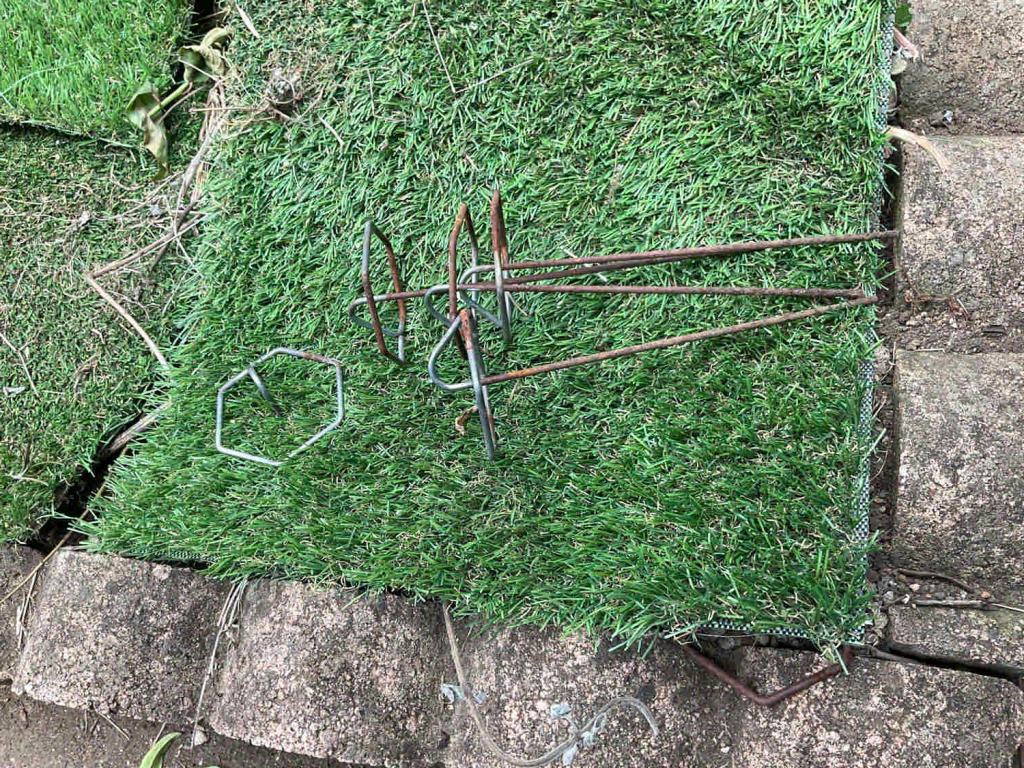
This misunderstanding turned out to be surprisingly productive. It revealed how AI makes assumptions, how those assumptions can be corrected through dialogue, and how the conversation evolves as a result.
This article summarizes that discussion — partly as a gardening note, partly as an example of how human–AI interaction actually works.
Artificial Grass Tiles vs. Black Mulch: What I Wanted to Know
I grow sweet potatoes every year. Traditionally, I’ve used black plastic mulch, which warms the soil and suppresses weeds. But this year, I wondered:
Could I replace black mulch with 30 cm (1 foot) × 30 cm (1 foot) artificial grass tiles?
These tiles are not continuous sheets. They leave gaps between each piece, allowing air and water to pass through. I also sometimes place dry branches underneath to create a ventilation layer.
My hope was that this setup might work as a low‑maintenance mulch alternative.
The AI’s Initial Response — and the Misunderstanding
The AI initially warned me that artificial grass “traps heat,” “reduces drainage,” and “causes severe moisture buildup.”
This is true — for artificial grass sheets.
But I wasn’t using sheets. I was using tiles, with plenty of space between them.
Once I pointed this out, the AI revised its reasoning:
- With gaps between tiles
- And with branches underneath
- Ventilation and drainage are actually better than black mulch
This was an important correction. It showed how AI often defaults to the most common interpretation unless the user pushes back.
So Which Is Better for Sweet Potatoes?
After refining the assumptions, the AI and I reached this conclusion:
Artificial Grass Tiles
- Better ventilation
- Better drainage
- Less risk of moisture buildup
- Good for weed suppression
- But do not warm the soil
Black Plastic Mulch
- Warms the soil by +3 to +7°C
- Promotes vine growth and tuber development
- Excellent weed control
- Minimal maintenance
- But less ventilation
Final Verdict
If you want maximum yield with minimum effort, black mulch still wins. Sweet potatoes love warm soil, especially in June.
Artificial grass tiles are fine if yield is not your priority and you mainly want weed control with good airflow.
Why This Conversation Was Worth Sharing
This exchange highlighted something important:
AI is powerful, but it makes assumptions.
Human correction improves the outcome.
My initial wording was correct, yet the AI still defaulted to the more common scenario. Only after clarification did the reasoning align with my actual situation.
This is exactly why I decided to publish this conversation. It demonstrates:
- How AI interprets user input
- How misunderstandings arise
- How dialogue refines the answer
- How human judgment remains essential
And from a gardening perspective, the discussion produced a surprisingly nuanced comparison of mulch options.
Conclusion
Artificial grass tiles can work as a mulch substitute if your goal is ventilation and weed suppression. But if you want strong sweet‑potato growth with minimal effort, black mulch remains the superior choice.
More importantly, this experience reminded me that AI is not a perfect oracle. It’s a tool that becomes more accurate through conversation — and sometimes, the misunderstandings themselves are the most interesting part.